Corpus Christi Blog
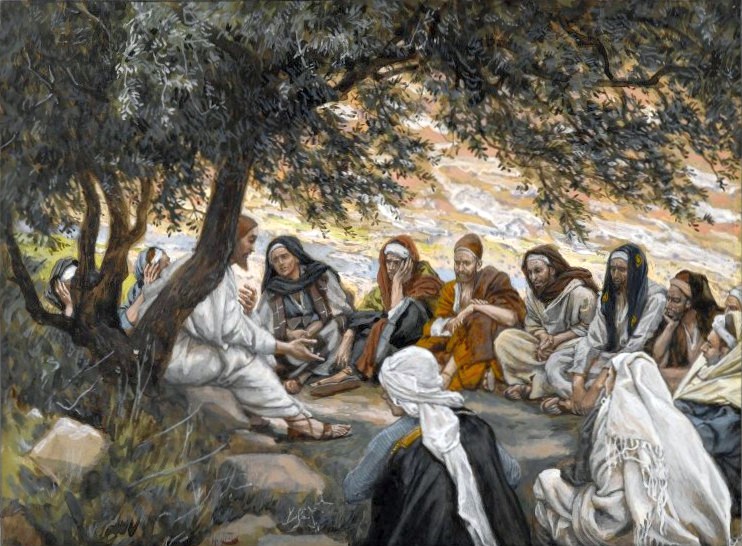
Our Share in Each of Christ’s Roles — Part 2: As Prophet
08-31-2025Weekly ReflectionJen Arnold, M.A.We are continuing our three-part series in which we discuss ways to practically live out our baptismal obligations of sharing in the threefold office of Jesus Christ as priest, prophet, and king. Last week, we covered how we serve as priests by offering sacrifice and prayer in our daily lives. This week, we will take a closer look at how we can live a prophetic life. First, we’ll examine what the Church teaches about the laity’s role as a prophet. Then we’ll explore the practical wisdom and advice offered by Fr. Mark-Mary Ames, CFR, in his book, Habits for Holiness: Small Steps for Making Big Spiritual Progress.
READ MORE
Our Share in Each of Christ’s Roles — Part 1: As Priest
08-24-2025Weekly Reflection Jen Arnold, M.A.This week, we will begin a three-part series on our participation in the threefold office of Christ as priest, prophet, and king, which comes with our baptismal obligations.
Fr. Mark-Mary Ames, a Franciscan Friar of the Renewal, lives in a friary in the Bronx. He has written a book, Habits for Holiness: Small Steps for Making Big Spiritual Progress. The premise of the book is that we all know what it means to be holy in an abstract sense, but it can be a challenge to figure out how to take small, manageable steps in order to grow in holiness. To that end, Fr. Ames offers practical wisdom and advice with real-world suggestions to incorporate into our daily lives.
READ MORE
Jesus is the Way, the Truth, and the Life
08-17-2025Weekly ReflectionJen Arnold, M.A.“I am the way, and the truth, and the life.” (Jn 14:6)
In a broader conversation with his apostles about heaven and his true identity, Jesus makes this very succinct but meaningful statement. Understanding these words is critical to the success of our spiritual journey. To achieve our goal of obtaining eternal salvation, we need to be transformed and configured to Christ. To help us along in this process, it would be helpful to have a deeper understanding of how Jesus is the Way, the Truth, and the Life so we can more closely unite ourselves to him.
READ MORE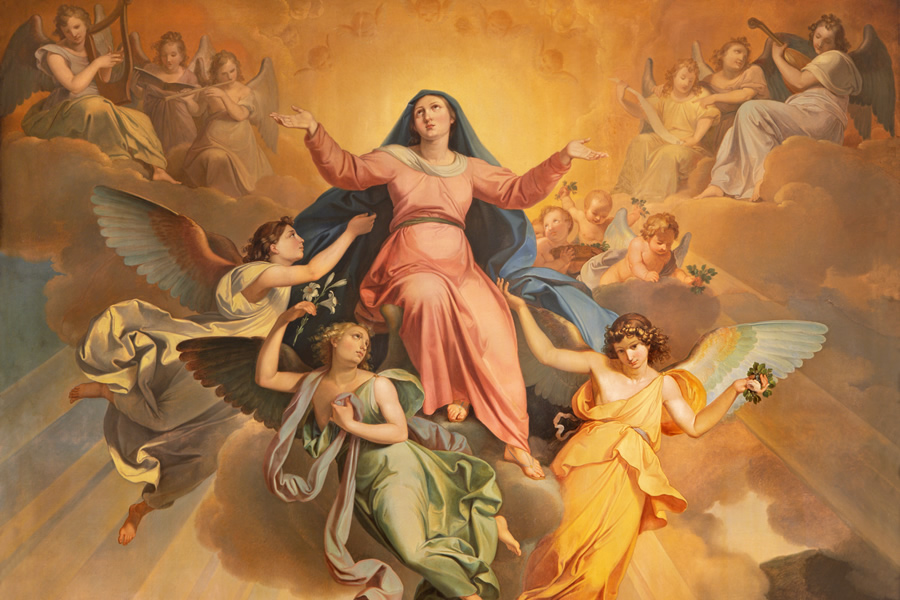
Mary in the Liturgy
08-10-2025Weekly ReflectionJen Arnold, M.A.Later this week, the Church will celebrate the Assumption of the Blessed Virgin Mary, a Holy Day of Obligation for Catholics. I have previously written about the four Marian dogmas, of which the Assumption is one, and the fifth Marian doctrine. I invite you to visit my website and read those to refresh your memory about what the Church teaches regarding Mary and how those teachings reveal truths about Jesus. So, rather than focusing on the Assumption specifically this week, I’d like to discuss Mary and her relationship to Catholic liturgy.
READ MORE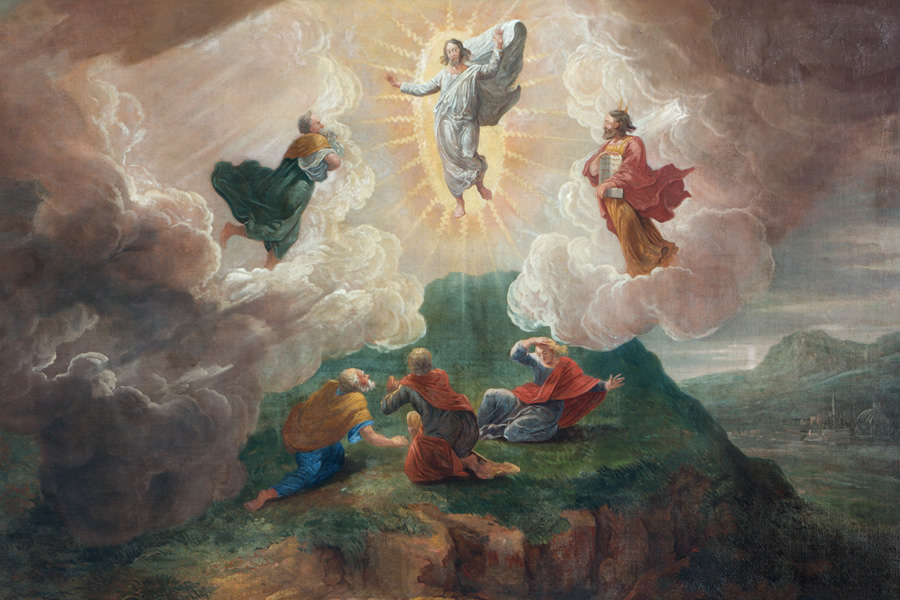
The Transfiguration of the Lord
08-03-2025Weekly ReflectionJen Arnold, M.A.Later this week, the Church will celebrate the Feast of the Transfiguration. Since it is not a holy day of obligation nor a feast designated for a set Sunday, this is an often overlooked and undervalued feast day, one that we don’t spend much focused time reflecting on its significance. The reality is that the Transfiguration event reveals a great deal to us about Jesus and his divinity. Let’s direct our attention to the Transfiguration to inspire a more fruitful encounter with the feast.
READ MORE
The Power of the Tongue
07-27-2025Weekly ReflectionJen Arnold, M.A.We live in a time of deep division. Whether we are discussing religion, morality, politics, workplace events, or even how we run a ministry, the language we use can be divisive and harmful if we are not careful. It can be argued that there have been many moments in history and cultures where this has been the case; however, the difference now is that we have the internet, social media, texting, and recording capabilities that cause our words to echo further and linger longer than ever before. We know that gossip damages relationships and reputations, but today, I would like to discuss some more nuanced forms of gossip that are formally identified in the Catechism of the Catholic Church so that we can be careful to avoid them in emotionally charged situations.
READ MORE
Carmelite Spirituality
07-20-2025Weekly ReflectionJen Arnold, M.A.The Catholic Church is very blessed to contain many religious orders, spiritualities, and expressions of faith. As members of the Church, we can draw on these expressions and incorporate them into our personal spiritual lives as we grow on our faith journey. I was recently inspired to explore the Carmelite order and its spirituality, as I had little experience with it outside of my knowledge of a few individual saints, such as Teresa of Ávila, John of the Cross, and Thérèse of Lisieux. I would like to share a brief history of the order, outline the key components of its spirituality, and discuss how we can incorporate Carmelite spirituality into our daily lives.
READ MORE
The Soul
07-13-2025Weekly ReflectionJen Arnold, M.A.We talk quite a bit about our souls when discussing our faith. We talk about the salvation of souls, whether they go to heaven or hell, their purification in purgatory, and the effect sin has on them. The very reason for the existence of our Church is for the care of our souls. But what exactly is a soul? If we deepen our understanding of what our soul is, it can help us to take better care of it.
READ MORE
How to Interpret Scripture
07-06-2025Weekly ReflectionJen Arnold, M.A.The Catholic Church has three sources of authority: Scripture, Tradition, and the Magisterium.
Scripture is the inspired Word of God written down by men throughout salvation history. After the Book of Revelation, there will be no new revelation to be added to Scripture until the Second Coming of Jesus brings everything to fulfillment. Tradition is the passing on of the Church’s practices, customs, and teachings orally and through the written word from the Apostles onward, forming the Deposit of Faith.
READ MORE
The Most Sacred Heart of Jesus & the Immaculate Heart of Mary
06-29-2025Weekly ReflectionJen Arnold, M.A.Today’s catechesis will require us to look back a couple of days to the Solemnity of the Most Sacred Heart of Jesus, celebrated on June 27, and the Feast of the Immaculate Heart of Mary, celebrated on June 28. These are two beloved devotions in our Catholic faith and worthy of a look into their history and significance.
READ MORE
Eucharistic Processions
06-22-2025Weekly ReflectionJen Arnold, M.A.This weekend, as we celebrate the Feast of Corpus Christi, also known as the Solemnity of the Most Holy Body and Blood of Christ, the Church highlights the real presence of Christ in the Eucharist in a special way. A central aspect of our traditional Corpus Christi celebration is the Eucharistic Procession, during which the Blessed Sacrament is carried out of the Church building and into the surrounding streets and communities. As with all of our Catholic rituals and customs, the Eucharistic Procession was not imagined as just a “good idea” by someone at some point in time. Rather, it is richly steeped in tradition and meaning. Let’s look at the origins and significance of the Eucharistic Procession.
READ MORE
Pray to the Father, through the Son, in the Holy Spirit
06-15-2025Weekly ReflectionJen Arnold, M.A.The mystery of the Most Holy Trinity — one God in three Persons: Father, Son, and Holy Spirit — is the central mystery of Christianity. For Catholics, this mystery isn’t just an abstract theological concept, but the very source and goal of our spiritual journey. Our entire life is meant to be sanctified by the Trinity, leading us to the “Beatific Vision” which is the fullness of life and love in the brilliance of the Trinity’s presence for all eternity. The Church invites us to enter into a personal and intimate relationship with the Triune God that transforms our hearts and daily lives. Let’s explore the practical ways we can live, pray, and worship the Trinity, so the mystery becomes more obvious, perceptible, and real to us every day.
READ MORE
Charisms
06-08-2025Weekly ReflectionJen Arnold, M.A.Pentecost is the day when the Church celebrates the descent of the Holy Spirit to guide and protect the Church after Jesus Christ left this earth and ascended to heaven. One of the ways the Holy Spirit guides his Church is by giving each of us special graces, or gifts, called “charisms” that allow us to assist in the missionary work of building up the kingdom of heaven on earth. The first example of this occurs in the story of Pentecost in Acts 2:1-41, when the Spirit rested on each of the apostles as a tongue of fire. They then spoke to a large, diverse crowd in various languages, resulting in the conversion of three thousand souls. However, that was only the first day of the Church’s mission. To ensure her continued growth for the salvation of souls, over the centuries, the Holy Spirit has gifted each member of the body of Christ with charisms. Let’s discuss what they are and how we ought to use them for the greater glory of God.
READ MORE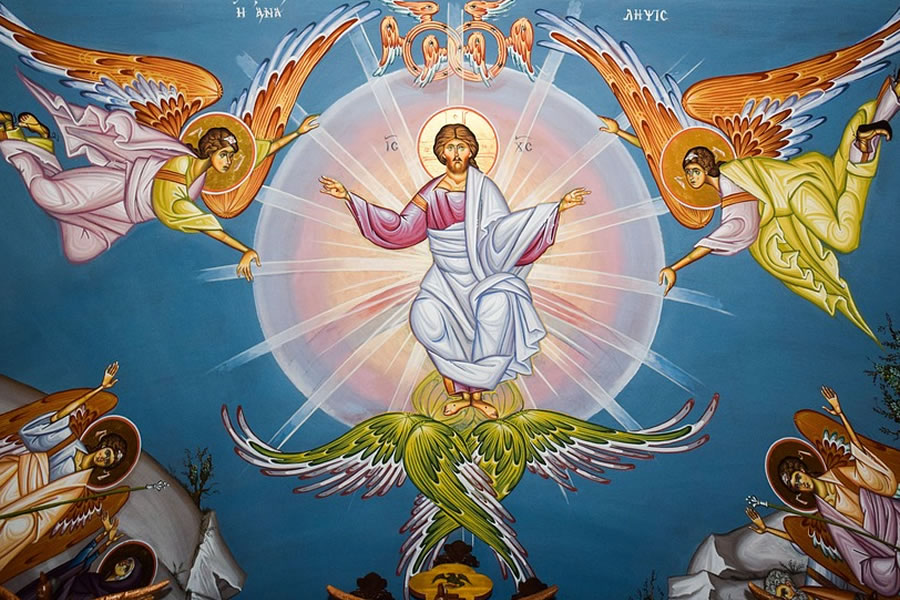
St. John Vianney’s Insights on Following Jesus to Heaven
06-01-2025Weekly ReflectionJen Arnold, M.A.As we celebrate the Feast of the Ascension today, I would like to share some insights from a homily given by St. John Marie Vianney (1786-1859) on this same feast day.
When Jesus ascended to heaven 40 days after his resurrection, he left his apostles here on earth commissioned to go forth and make “disciples of all nations” (Mt 28:19). Even more broadly beyond his apostles, he left behind his Church, the Catholic Church we’re in now, to continue that mission until his Second Coming at the end of time. Jesus knew what his apostles and his Church would endure after he was gone and, therefore, he gave warnings to prepare them, but always encouraged them with promises of rewards for their faithfulness. St. John Vianney begins his homily with a paraphrase of the warning Jesus gave multiple times throughout scripture, along with the promises that come with it.
READ MORE